


 Schedule Now
  (469)-221-9095
 A healthy yard in Dallas doesn’t happen by accident. North Texas weather has a personality of its own. Long, hot summers. Sudden spring storms. Clay-heavy soil. Weeks without rain, followed by downpours that leave puddles sitting for days.
If you’ve ever looked at your grass in July and wondered what went wrong, you’re not alone.
The good news is that Dallas lawns can look thick and green almost year-round with the right care. You don’t need gimmicks. You don’t need to overcomplicate it. You just need the right timing, steady habits, and a little understanding of how grass behaves in this region.
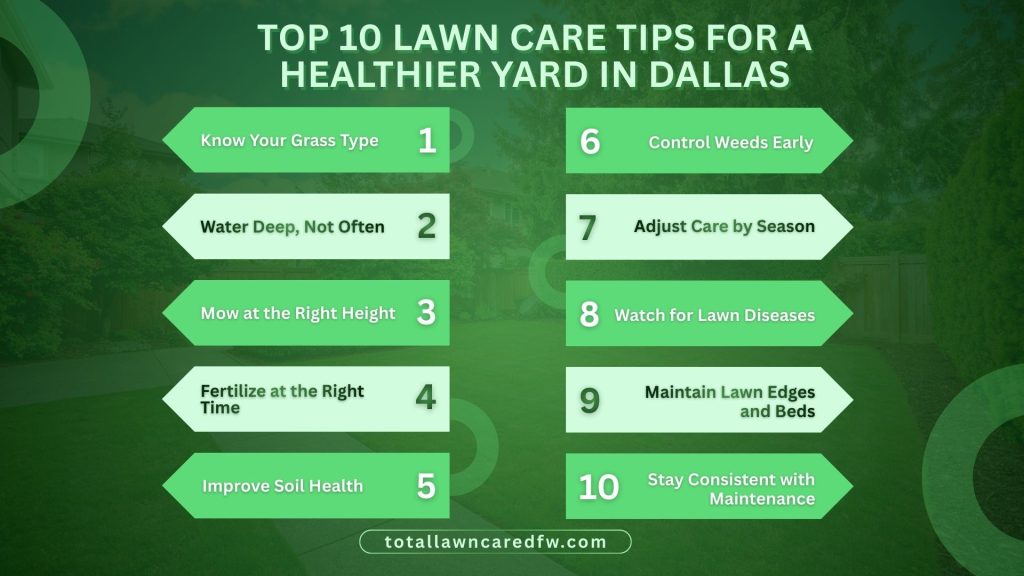
Below are ten practical, proven lawn care tips tailored for homeowners in Dallas and surrounding communities like Plano, Frisco, and Prosper. These are the same principles trusted by professionals who provide quality lawn care services across North Texas.
1. Know Your Grass Type Before You Do Anything
This sounds basic, but it’s where many lawn problems begin.
Most Dallas lawns are planted with warm-season grasses, such as
- Bermuda
- St. Augustine
- Zoysia
- Buffalo grass
These grasses thrive in heat. They love sunlight. And they naturally go dormant when temperatures drop in winter.
Why does this matter?
Watering schedules, mowing height, and fertilization all depend on the grass type. For example:
- Bermuda prefers shorter mowing.
- St. Augustine should be cut higher to prevent stress.
- Zoysia needs consistent but not excessive feeding.
If you treat all grass the same, you’ll stress it. Stressed grass invites weeds and disease.
Before starting any serious yard maintenance in Dallas, identify what you’re working with. It sets the foundation for everything else.
2. Water Deeply, Not Often
One of the most common mistakes in lawn care in Dallas is shallow watering.
It’s tempting to run sprinklers every day for a short time. The problem? That trains roots to stay near the surface. When summer heat hits 100 degrees, shallow roots dry out fast.
Instead, water deeply and less frequently.
For most warm-season lawns in North Texas:
- 1 to 1.5 inches of water per week during active growth
- Spread across one or two watering days
- Early morning is best
Deep watering encourages roots to grow downward into cooler soil. That makes your lawn more drought-tolerant and resilient during water restrictions.
If you’re unsure how much water your system puts out, place a few small containers around the yard during irrigation and measure the depth.
Simple, yet effective.
3. Mow at the Right Height for Dallas Conditions
Mowing isn’t just about keeping things tidy. It directly affects lawn health.
In Dallas, mowing height matters more than many homeowners realize.
Here’s a quick guide:
- Bermuda: 1 to 2 inches
- St. Augustine: 2.5 to 4 inches
- Zoysia: 1.5 to 2.5 inches
Cutting too low stresses the grass and exposes the soil to the sun. That creates ideal conditions for weeds like crabgrass.
Another rule worth remembering: never remove more than one-third of the blade at a time.
If your grass gets too tall, lower the height gradually over several mowings.
Consistent mowing, especially with a weekly lawn service in Dallas, keeps growth steady and reduces shock during peak heat.
4. Feed Your Lawn at the Right Time of Year
Fertilizing is important, but timing is everything.
In North Texas, warm-season grasses wake up in late spring when soil temperatures consistently reach about 65 degrees.
That’s when feeding should begin.
A typical Dallas lawn fertilization schedule includes the following:
- Late spring feeding after green-up
- Early summer feeding
- Optional late summer feeding depending on grass condition
- Avoid heavy nitrogen in fall for warm-season lawns
Over-fertilizing can burn grass and contribute to disease, especially in humid conditions.
A balanced approach works best. Soil testing can help determine what nutrients are actually needed instead of guessing.
Many homeowners who use lawn care maintenance services in Plano, TX, and surrounding areas rely on seasonal fertilization programs to stay on schedule without overdoing it.
5. Don’t Ignore Soil Health
Dallas soil is often dense clay. That means:
- Poor drainage
- Compaction
- Limited airflow to roots
If your lawn struggles even with watering and feeding, compacted soil may be the problem.
Core aeration helps relieve that compaction. It involves removing small plugs of soil to allow air, water, and nutrients to move deeper.
For most lawns in Dallas:
- Aerate once per year during active growth
- Late spring to early summer works well
You may notice less pooling after rain and stronger root development.
Healthy soil supports healthy grass. It’s that simple.
6. Control Weeds Before They Take Over
Weeds are persistent in North Texas. Crabgrass, clover, nutsedge, and broadleaf weeds are common.
The key is prevention.
Pre-emergent herbicides applied in early spring and again in fall can stop many weeds before they sprout.
Timing matters. In Dallas, spring pre-emergent is often applied around February or March before the soil warms too much.
Once weeds appear, post-emergent treatments can target them without harming turf if applied correctly.
Let weeds spread, and they will compete for water and nutrients. Stay ahead of them, and your lawn stays thicker.
7. Adjust Care with the Seasons
Dallas doesn’t have gentle transitions between seasons. Spring can be stormy. Summer can be intense. Fall cools quickly.
Your lawn care routine should shift with those changes.
Spring:
- Remove debris
- Begin mowing as the grass greens up
- Apply pre-emergent
Summer:
- Raise the mowing height slightly
- Monitor irrigation
- Avoid heavy fertilization during extreme heat
Fall:
- Apply fall pre-emergent
- Continue mowing until growth slows
- Light feeding if needed
Winter:
- Minimal mowing
- Avoid heavy traffic on dormant grass
Many Dallas lawn care schedules follow this rhythm to keep grass healthy throughout the year.
8. Watch for Lawn Diseases and Treat Early
High humidity and heat create conditions for fungal problems.
Common issues in Dallas include:
- Brown patch
- Take-all root rot
- Gray leaf spot
Signs to watch for:
- Circular brown areas
- Thinning patches
- Yellowing that doesn’t improve with watering
Overwatering often contributes to disease. So does excessive nitrogen.
If you suspect disease, reduce watering frequency and consult a professional before applying treatment.
Early action prevents widespread damage.
9. Keep Edges, Beds, and Hardscape Clean
A healthy lawn isn’t just about grass.
Sharp edges along sidewalks and driveways create a finished look. Clean flower beds reduce weed spread. Mulch helps retain moisture and protect roots.
Regular trimming and edging make even average lawns look well cared for.
When yard maintenance in Dallas includes bed care and trimming, the entire property feels more intentional and polished.
10. Consider Professional Lawn Care When It Makes Sense
Maintaining a healthy yard in North Texas takes consistency.
Between work, family, and unpredictable weather, it’s easy to fall behind.
Professional services can help with:
- Weekly mowing
- Fertilization schedules
- Weed control
- Aeration
- Seasonal adjustments
For lawn care in Dallas or surrounding cities, working with a local team that understands regional soil and weather patterns can save time and frustration.
Total Lawn Care DFW provides reliable service across the area, focusing on steady maintenance rather than quick fixes.
Sometimes, having experienced eyes on your yard makes all the difference.
Bringing It All Together
A healthier yard in Dallas isn’t about one magic product. It’s about consistent care.
Water deeply. Mow correctly. Feed at the right time. Stay ahead of weeds. Pay attention to the soil. Adjust to the seasons.
Do these things regularly, and your lawn will respond.
If you prefer expert help, Total Lawn Care DFW supports homeowners throughout the area with practical, no-nonsense service built around real North Texas conditions.
Your yard doesn’t need to be perfect. It just needs steady care. And once that rhythm is in place, the results speak for themselves.