


 Schedule Now
  (469)-221-9095
 A full-service lawn plan in Plano covers weekly or biweekly mowing, edging along walks and beds, string trimming, blowing hard surfaces clean, seasonal weed control, and seasonal cleanups, with a summer irrigation check folded in so your system keeps up during triple-digit weeks. On our Plano routes, the plan is built around the grass you actually have. Bermuda gets cut low, and often, St. Augustine gets cut taller to hold moisture in the clay soil. The point of one plan is simple: the same crew sees the lawn every week, catches a dry spot or an armyworm patch early, and adjusts before a small problem spreads across the yard.
Why One Plan Beats Booking Services One At A Time
Most Plano homeowners start with just mowing, then add weed control after the first summer of dollarweed, then call someone in October because the beds are a mess. You end up managing three vendors who never talk to each other, and none of them owns the outcome.
A single plan fixes the coordination problem. The crew that mows your Bermuda is the same crew watching for the first fire-ant mound, the same crew that notices the St. Augustine near the fence is thinning because a sprinkler head got knocked sideways. That continuity is the real product. When we bundle lawn care services in Plano, TX into one schedule, nobody is guessing about what happened last visit.
There is a money angle too. Piecing services together usually costs more than a plan, because each one-off trip carries its own drive time and minimum charge. A recurring plan spreads that cost across the season, and it removes the mental load of remembering which vendor you called last and what they did.
It also changes how problems get handled. A one-off mower has no reason to flag a fungus patch, because they are not coming back and it is not their job. A crew on a recurring plan does, because they are the ones who will be standing on that same brown patch next week explaining why it spread. The incentive lines up with the outcome you actually want, which is a lawn that looks good all season, not just the day it was cut.
What A Full-Service Lawn Plan Actually Covers Week To Week
Here is the honest breakdown of what belongs in a Plano plan, and what each piece is really for.
| Service | How often | Why it matters in Plano |
| Mowing at the correct height | Weekly in summer, biweekly in slow months | Wrong height is the top cause of brown, stressed turf here |
| Edging and string trimming | Every mow | Clean lines along the black-clay beds that shift and crack |
| Blowing clippings off hard surfaces | Every mow | Keeps clippings out of storm drains, meets local tidiness expectations |
| Seasonal weed control | Pre-emergent late winter, spot treatment through summer | Crabgrass and dollarweed set in fast in warm, humid stretches |
| Seasonal cleanup | Spring and fall, plus mid-summer bed touch-ups | Leaf litter and dead growth smother turf and trap moisture |
| Irrigation check | Start of summer, then as needed | A single stuck head can dry out a whole zone in a week |
Not every yard needs every service on the same rhythm. A shaded St. Augustine lawn in west Plano behaves nothing like a full-sun Bermuda lawn off Legacy, and a good plan is built around that difference rather than a one-size template.
Mowing height is the decision that makes or breaks the plan
This is the part homeowners underestimate. Bermuda wants to be cut short, roughly one to two inches, and cut often so it never loses more than a third of its blade at once. St. Augustine is the opposite. It wants to stay tall, around three to four inches, because that extra blade length shades the soil and slows evaporation in our heat.
Cut St. Augustine too short in July, and you scalp it; the runners bake, and you get brown patches that look like disease but are really just sunburn. We see this constantly on lawns a homeowner mowed themselves at the Bermuda setting. Matching mow height to grass type is the single most important thing a plan gets right in Plano.
Weed Control And Fertilization Timed To North Texas Seasons
Weed control is not one spray. A full-service plan splits it into a pre-emergent barrier and in-season spot treatment.
The pre-emergent goes down in late winter, before soil temperatures climb, to stop crabgrass and other summer weeds from germinating. Miss that window, and you spend the whole summer chasing weeds that are already up. Once the season is running, the plan shifts to spot treatment for the broadleaf weeds Plano lawns get in warm, humid weather, dollarweed and nutsedge being the usual suspects near irrigation and low spots. Ongoing weed control inside a plan means those flare-ups get hit while they are small, not after they have seeded the whole yard.
There is a reason we push the pre-emergent timing so hard. Once crabgrass germinates, no amount of post-emergent spraying puts the season back the way it was; you are just knocking down plants that already stole space and water from the grass you want. Getting the barrier down before soil temperatures cross the germination threshold is a once-a-year window, and missing it by two weeks is the difference between a clean summer lawn and one you fight all season. That is exactly the kind of timing a plan protects, and a piecemeal, call-when-you-notice approach usually blows.
Fertilization rides the same calendar. Warm-season grasses here want to be fed when they are actively growing in late spring through summer, not in the dormant cold months when feeding just wastes product and can push weak growth. Feed Bermuda or St. Augustine while it is dormant, and you are mostly feeding weeds, which happily take up nutrients when the grass is asleep. A plan keeps these timings straight so you are not fertilizing a lawn that is resting or spraying weeds that already went to seed.
Seasonal Cleanup Is Not Just A Fall Thing In Plano
Ask most people what seasonal cleanup means and they picture raking leaves in November. In Plano, the plan spreads cleanup across the year, and mid-summer matters more than people expect.
Spring cleanup clears winter dieback and gets beds ready before the growth push. Fall cleanup handles the leaf drop. But summer needs attention too: spent growth, storm-blown debris after a North Texas thunderstorm, and overgrown bed edges all trap heat and moisture against the turf, which is exactly how fungal problems like brown patch get started in humid weeks. A quick bed touch-up during a regular mow visit keeps air moving and stops small messes from turning into disease pressure.
Plano gets its share of hard summer storms, and the day after one is when a plan earns its keep. Snapped limbs, blown-in leaves, and mulch washed onto the turf all sit there smothering grass if nobody clears them. Because a crew is already scheduled, that cleanup happens on the next regular visit instead of waiting for you to notice and book a separate trip a week later, by which point the covered grass has already yellowed.
That year-round rhythm is why seasonal cleanup lives inside the plan instead of being a separate call. The crew is already on-site, so a ten-minute cleanup is folded into the visit rather than billed as its own trip.
The Summer Irrigation Check Most Plans Skip
Here is the practitioner detail that separates a real plan from a mow-and-go service. During the first hot stretch of summer, a full-service plan should include a walk-through of your irrigation while the system runs a cycle.
Why it matters here specifically: Plano sits on tight black clay that sheds water fast when it is dry and cracked, so a lawn can look watered on the schedule and still be starving because the water ran off instead of soaking in. On top of that, North Texas cities including Plano commonly run seasonal watering restrictions in summer, so you often have fewer allowed watering days than the grass wants. That combination means every drop has to land where it counts.
When we run a Plano yard’s system on a hot morning, the things we catch most often are a head knocked sideways by a mower or a car tire, a clogged nozzle leaving a dry fan-shaped dead spot, and a zone set to a short cycle that runs off the clay instead of soaking in. Fixing a single misaimed head early can save a whole corner of St. Augustine from going brown, and it is far cheaper than replacing dead sod in August. A plan that never looks at the irrigation is guessing about the one input that keeps grass alive in a Plano summer.
One trick that comes straight from watching Plano lawns run: on tight clay, a single long watering cycle mostly runs off, so the water sheets across the surface and down the driveway instead of reaching the roots. Splitting the same total runtime into two shorter cycles a half hour apart, sometimes called cycle-and-soak, lets the first pass soften the clay so the second pass actually soaks in. Most homeowners never touch their controller settings, so this is a free fix a plan can set up once and leave running all summer. It is the kind of adjustment you only make if someone is actually watching how the water behaves on your specific soil.
How Plans Scale By Yard Size And Grass Type
Two Plano lawns of the same square footage can need very different plans. A small full-sun Bermuda front yard is fast to mow but demands a tight weekly rhythm because Bermuda grows aggressively in heat. A larger St. Augustine backyard under tree cover mows less often but needs more eyes on shade-related thinning and fungus.
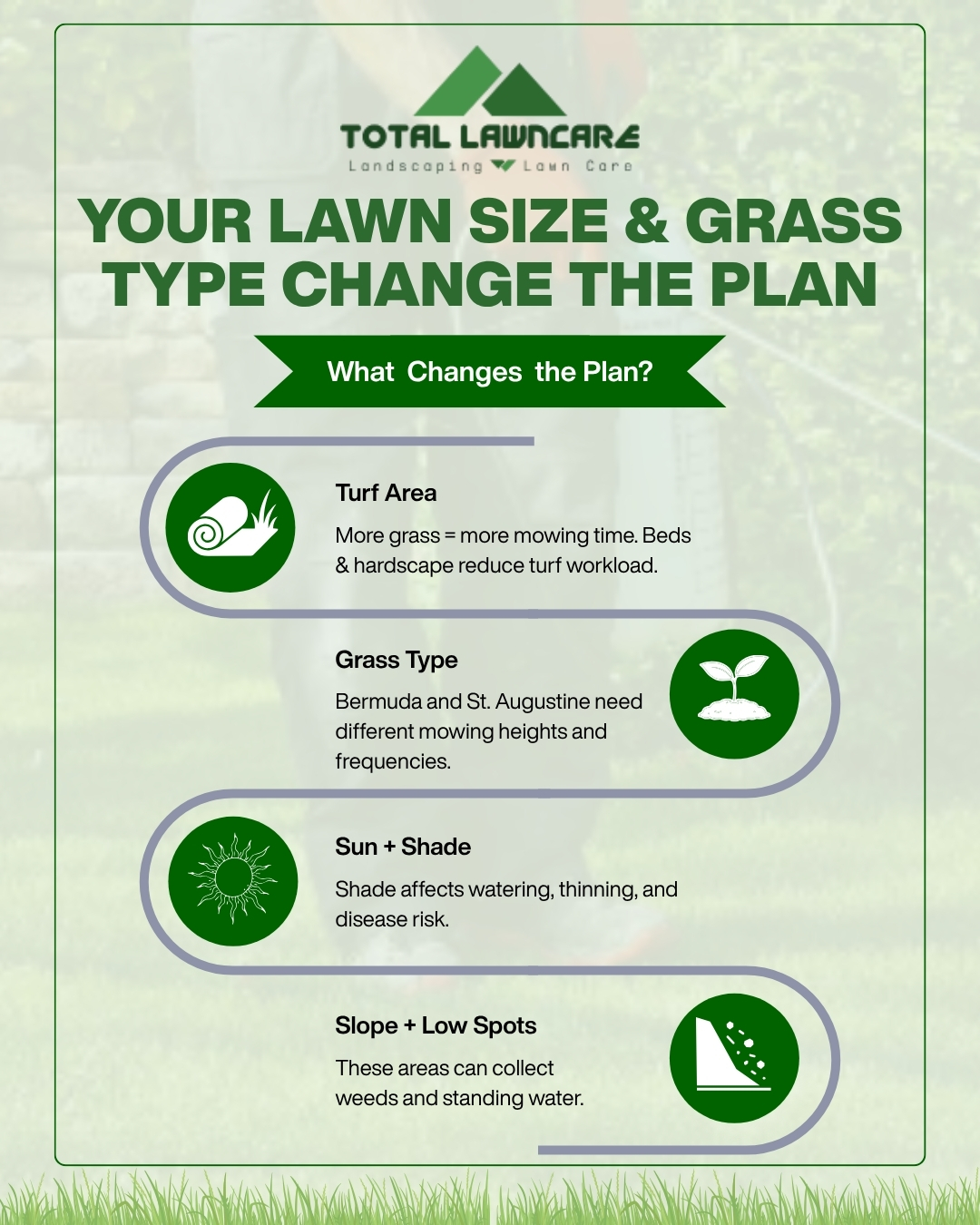
A good lawn maintenance plan reflects that. The variables that actually move the price and schedule:
- Total turf area and how much is bed or hardscape versus grass
- Grass type, since Bermuda and St. Augustine want opposite mow heights and frequencies
- Sun and shade mix, which drives watering needs and disease risk
- Slope and low spots, which is where weeds and standing water concentrate
None of that is exotic. It just means the honest answer to “what does a plan cost” is a range, and the only way to price it well is to look at the specific yard. Two houses on the same Plano street can land at different numbers because one is mostly open Bermuda and the other is half shaded beds and St. Augustine that needs closer watching.
A plan is also a living thing across the season, not a fixed contract you set and forget. Summer runs on the tightest schedule because everything grows fast in the heat. As the weather cools in fall and the grass slows, mowing frequency steps down and the work shifts toward cleanup and getting the lawn ready for dormancy. A good plan flexes with that curve instead of charging you for weekly summer visits in November when the grass has stopped growing. That flexibility is part of why one coordinated plan tends to beat a stack of separate services that each run on their own rigid rhythm.
Getting your Plano yard on one plan
If you are tired of juggling separate mowing, weed, and cleanup calls, folding it all into one schedule is the practical fix, and it is the whole idea behind a full-service plan. The crew sees your lawn every week, knows whether you have Bermuda or St. Augustine, and catches the dry spots and weed flare-ups before they spread. When you are ready to talk specifics for your yard, Total Lawn Care DFW can walk your property, look at your grass and irrigation, and build a plan around what your lawn actually needs this summer.