


 Schedule Now
  (469)-221-9095
 A Dallas summer is its own kind of test for a lawn. By mid-July, temperatures sit in the high 90s and 100s for weeks at a time. The sun bakes everything, the wind dries out whatever the sun missed, and the rain forecast hovers around zero. Most lawns start to show stress by the end of June, and by August, they look downright defeated unless someone is paying attention. The question of how to keep grass green in Dallas during extreme heat comes up every year, and the answer isn’t a single trick. It’s about getting a few key things right all at once and avoiding the common mistakes that turn a struggling lawn brown.
We work on lawns across the metro all summer, and the difference between the green ones and the brown ones almost always comes down to the same handful of habits. Here’s what works.
Why Dallas Heat Is So Hard on Lawns
Dallas heat does three things at once. It evaporates water faster than your sprinkler can put it down. It scorches grass blades that are already stressed. And it stresses root systems that have been weakened by clay soil and inconsistent watering all year. By the time you notice your grass turning brown, the damage is already a few weeks old.
The grass species you have matters too. Bermuda grass handles heat better than the common Dallas options. St. Augustine struggles more, especially when planted in poor soil or watered incorrectly. Zoysia handles heat well once established. Each one has its own threshold, but every grass species has limits, and Dallas summers test them.
1. Water Deep, Not Often
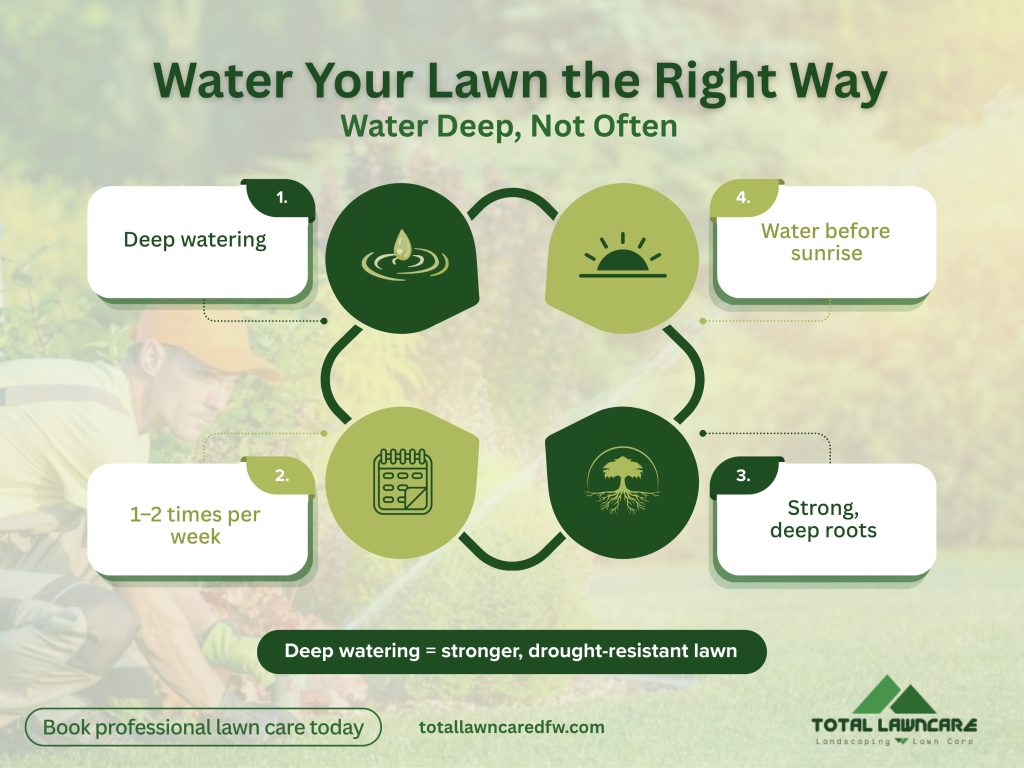
This is the single biggest fix for most struggling lawns, and it’s the one homeowners get wrong most often. Daily watering feels like the right answer when it’s hot. It isn’t. Watering every day with light amounts trains the grass to develop shallow roots that can’t survive a single missed day, and keeps the soil surface wet enough to encourage disease.
The right pattern for Dallas lawns in summer is deep, infrequent watering. Once or twice a week, with enough water to soak down 4 to 6 inches into the soil. That trains the roots to grow downward, looking for moisture, builds drought resistance, and keeps the surface dry enough to avoid fungal issues.
How much water that takes depends on your sprinkler system, but a good rule is about 1 to 1.5 inches of water per week total, delivered in 2 sessions. To measure how much your sprinklers actually deliver, place a few empty tuna cans around the yard and run the system for 15 minutes. Measure the water depth and calculate how long it takes to get to 1.5 inches.
Always water before sunrise. Watering in the heat of the day wastes water to evaporation and can scorch wet grass blades. Watering at night leaves the lawn wet for hours and feeds disease. Pre-dawn is the sweet spot.
2. Mow Higher and Less Often
The second biggest fix is mowing height. In summer, raise your mower deck. Most Dallas lawns get mowed too short, especially when homeowners try to keep the cut neat with weekly mowing. Short grass has short roots. Short roots can’t reach moisture during drought. Short grass also lets sunlight hit bare soil, which dries it out faster and bakes the root zone.
Recommended summer mowing heights:
- Bermuda: 1.5 to 2.5 inches
- St. Augustine: 3 to 4 inches
- Zoysia: 1.5 to 2.5 inches
- Buffalo grass: 3 to 4 inches
Stick to the upper end of the range during the hottest weeks. Taller grass shades the soil, holds moisture longer, and develops deeper roots. The lawn looks slightly less manicured, but it stays alive when its short-cut neighbors are crispy brown.
Mow less often during peak heat. The grass grows more slowly in extreme temperatures anyway, and every cut is a stress event. Going from weekly to every 10 to 14 days is fine for most lawns in August.
Also, never cut more than one-third of the grass blade in a single mowing. Cutting too much at once shocks the plant and weakens the roots.
3. Fertilize the Right Way for Summer
Fertilizing incorrectly in summer can hurt more than help. Too much nitrogen pushes blade growth at exactly the wrong time, when the roots are too stressed to support the new growth. The result is a lawn that looks lush for a week and then collapses.
A better summer fertilizing approach for Dallas lawns:
- Use a slow-release fertilizer designed for warm-season grass
- Apply at half the spring rate to avoid stress
- Time applications for early morning, never midday
- Water deeply right after application to move nutrients into the soil
- Add an iron supplement if your lawn is yellowing on alkaline soil
- Skip nitrogen entirely during the absolute peak of heat (mid-July to mid-August)
- Resume normal fertilizing in early September as temperatures drop
Iron is the secret weapon for many Dallas lawns. The alkaline soil locks up iron, so even a healthy lawn often shows yellow patches that look like nitrogen deficiency. A liquid iron foliar spray greens up most lawns within days without adding stress.
4. Treat Stress and Disease Early
Heat-stressed lawns get sick faster. Watch for early signs of trouble and act before they spread. The most common summer issues in Dallas lawns include:
Brown patch: A circular or irregular brown area in St. Augustine or Zoysia, caused by a fungus that thrives in warm, wet conditions. Treat with a lawn fungicide and adjust watering to reduce moisture on grass blades.
Take-all root rot: A serious disease in St. Augustine that causes thinning and yellowing. Hard to treat once established. Prevention with healthy soil and proper watering matters more than reactive treatment.
Chinch bugs: Tiny insects that damage St. Augustine grass, especially in sunny, dry areas. Look for irregular dead patches that spread outward. Treat with an appropriate insecticide if you confirm the bugs are present.
Grub worms: Beetles in larva form that eat grass roots. Causes large, irregular, dead spots that lift like loose carpet. Apply grub control in spring or early summer for prevention.
Drought stress: Footprints stay visible in the grass, blades fold or curl, and color shifts from bright green to dull blue-green. Increase watering depth before the lawn fully dries out.
The earlier you catch and treat these, the easier the fix. Waiting two weeks usually doubles the recovery time.
5. Avoid the Mistakes That Kill Summer Lawns
Some habits actively make things worse. Avoid all of these:
- Watering daily with light amounts
- Mowing too short
- Mowing wet grass
- Fertilizing during peak heat with quick-release nitrogen
- Letting the lawn get completely dry between waterings
- Watering at night
- Walking on the lawn repeatedly during drought stress
- Ignoring early signs of disease
- Skipping fall prep, which weakens the lawn for next summer
- Using the wrong grass species for your sun and soil conditions
Each of these alone can cost you a green lawn. Stack two or three together, and the lawn doesn’t stand a chance.
A Simple Summer Lawn Routine
Here’s the routine that works for most Dallas lawns through July and August:
- Monday morning: Water deeply at sunrise
- Mid-week: Walk the lawn, look for stress patches, treat anything new
- Thursday morning: Water deeply again at sunrise
- Saturday morning: Mow at the proper height, only if the grass actually needs it
- Monthly: Apply an iron foliar spray if yellowing appears
- Every 6 weeks: Apply slow-release fertilizer at half rate
Stick with that for the whole season, and your lawn will be in much better shape than the average yard on the block.
When Heat Damage Is Already Done
Sometimes you’re starting from a lawn that already looks rough. The fix isn’t always quick, but it’s possible. Begin by deep watering the entire yard, raise the mowing height immediately, apply iron, and let the grass rest for a week or two before any heavy treatment. Most lawns can recover from moderate heat stress in 3 to 6 weeks if conditions improve. Severe damage may need overseeding or sod patching in the fall.
The most important thing during recovery is patience. Don’t try to force green color with extra fertilizer or extra water. That makes things worse. Slow, steady recovery is the only path that works.
Wrapping Up
A green lawn in Dallas in August is doable, but it takes the right habits done consistently. Water deep, mow high, fertilize lightly, watch for stress, and avoid the mistakes that wreck most struggling yards. None of it is magic. It’s just paying attention to the basics that match the climate. Your neighbors might still have brown lawns. Yours doesn’t have to.
When you’d rather hand it off to someone who handles this every day, we’re happy to take a look at your yard, build a plan that fits the soil and the grass you have, and keep things looking good through the worst of the heat. At Total Lawn Care DFW, we work on lawns across the metro all summer, and we’d rather get yours healthy than just push services. Give us a call when you’re ready, and we’ll take it from there.